• THERMAL OIL HEATERS


    Used in zones where the supply of natural gas, gasoil or fuel oil is easy.


    They realize a warming of thermal oil in closed circuit.


    They yield heat for convection to consuming machines inside a productive process.
  • ELECTRICAL HEATERS AND BOILERS


    They contribute heat by means of electrical resistances of very low density.


    Performance of 100 % of the emaciated energy.
  • WASTE HEAT RECOVERY UNITS


    Used in the installations of cogeneration.


    They take advantage of the latent heat in the gases of combustion of engines, turbines, incinerators,...
  • HEAT EXCHANGERS


    - Vaporizer: used for small consumptions of steam in facilities of thermal oil.


    - Interaccumulator waters down warmly: warm water tank sanitary in facilities of thermal fluid.


    - Interchanger oil - oil: warming of vegetable(plant) oils with thermal oil.

The white oils and their uses in the industry (II)

As I have already written in our previous blog, in this occasion we will enumerate processes in those white oils are used, being two the mainly ones:

as heat transfer fluid in installations in those the final products are for direct human consumption ,
as an oleic base of a final product that will be used directly by humans, and which we consider medicinal white oils.

In relation to the first topic, it is recommended the use of the white oils as heat transfer fluids in the installation of thermal fluid heaters, when the last ones are used with reactors, friers or equipments able to produce pharmaceutical products, food, etc., in order to avoid the alteration of the final product of human consumption during the production process, because of an accidental leak of a toxic thermal fluid.

According to the information that we have found, we think that there are two types of white fluids: the medicinal ones (base of products) and those used as heat transfers, both with low toxicity. If some reader agrees with the present statement, please confirm!!!!

In reference to the second subject, hereby we include a list of products in which medicinal white oils are present as base component:

Preparation of cosmetics:

- Cream, sun lotions and milks, ointments, paper impregnation, etc.
- Softening and moisturizers (oils and cleaner milks, lipsticks, powdered make-up);
- Products for children (shampoos and bathroom oils);
- Products for the hair care;
- As protective and neuter diluter for other ingredients of cosmetics, as essential oils; as anti-perspirants and deodorants in bar.

For their use in the food industry are added inhibitors of the corrosion:

- Unmolding in bakery products and pastries,
- Frying potatoes or chips, fruits as peanuts, etc… and ready or pre-cooked meals.
- Also used in treatment of rice,
- Emulsified oils for jams,
- Packaging of fruits,
- Conservation of eggs.

In the pharmaceutical industry, it has a high level of security due to:

- Their maximum purity (absence of toxic aromatic polyciclics and heavy metals),
- The complete destruction of germs in the process of production at high temperature,
- Used in specific procedures of packaging and manipulation: ingredients of the pharmaceutical ointments of topic use and petroleum jellies.
- It can be used as auxiliary element in the production of pills and in the production of capsules of jelly. The white medicinal oil is used in laxatives and liquid vaselines.

The white medicinal oils should satisfy the requirements of the regulation FDA defined in the clause 21 CFR 172.878 of the U.S.P. (USA), D.A.B. (Germany), B.P. (United Kingdom), CODEX (France) and Spanish Pharmacopea.
Read More!

The white oils and their uses in the industry (I)

The raw oils are mixtures that contain thousands of different molecules. Because these complex mixtures are difficult to identify chemically, the oils are classified, according to the type of predominant hydrocarbon and their refinery process: paraffinical and naphthenics or aromatic.

The naphthenic oils are obtained directly from the refinement of the raw petroleum and they are practically free of paraffin (they only contain a 45%). This implies a constant flow of very low
temperatures, essential characteristic in several applications. To obtain "refrigeration grade" naphthenics oils, they should be put under complex physical and chemical treatments as unparaffin, bleach, elimination of sulphur, treatments with acids and solvents,...

The paraffinic oils possess a 75% of paraffin and only 25% naphthenic and aromatics.

Next, we will speak about the white oils, and their applications will be treated on the next number of this blog.

The white oil is obtained starting from paraffinic fractions of mixed base or naphthenic one, depending on the definitive use. The process is carried out for vacuum-distillation, followed by several refinement processes, included a final purification with catalytic regeneration. Their applications are specially important in products that have direct and forced contact with the human being, for what should be no toxic, not to stain and nor to contaminate.

The highest purity white oil is free of not saturated components: it is colourless due to the inert chemically nature of the hydrocarbons contained in. On the other hand, these oils are obtained with a process of hydrogenation by that the content of aromatics decreases to values smaller than 0.1%.

The white oils can be of two types: for technician or industrial use and for medicinal use.

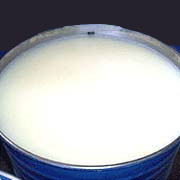
The medicinal white oil is colourless, odourless and insipid and it has chemical and thermal great stability. It is liquid slight paraffin and an excellent lubricant that presents a good adherence and greasiness.

You can consult:
www.quiminet.com.mx

Read More!

Improvements in the blog


The last days, we have been modifying the design and content of the Blog. Our objective was to improve the use of the Blog and to provide pursuit easiness to the readers. As you can see, we continue of taking advantage of the tools that the Web 2.0 model provides to us (in our opinion, the way to follow).

We have added new tools like the following:

  • Fast access

  • Possibility of adding blog in the favourites of the reader

  • Possibility of adding blog in pages of beginning like Google or Netvibes

  • To receive the new entrances by RSS with many RSS readers

  • To receive the new entrances by mail

  • Contact form.

And also, there are in addition 2 graphical complements:

  • Album of photos

  • Published videos

In order to improve mobility and access to the different existing sections within the Blog, we have positioned in the left lateral menu those sections related to the content of the Blog (published archives, categories, RSS,…) and in the right menu we have introduced those sections related to us (presentation, form of contact,…).

We hope that these changes help and make more agile east you blog. Without a doubt we are open to your commentaries, proposals and critics since we oriented blog exclusively.


Read More!

The thermal fluid transmitters of heat

PIROBLOC as specialist in the design and manufacture of thermal fluid heaters and other apparatuses that use that type of heat transmitting fluids, is today interesting to approach them to you and giving you more data on such.

Types:

The synthetic fluids fulfill the majority specific functions. Some of them have problems due to the toxicity, to the high point of freezing or the high viscosity at low temperature.
ha
The mineral oils fulfill with the next described requirements, a rank of application of temperatures from -10º C to 300º C and an index of viscosity in the rank 0-100 ST.

The basic requirements of any fluid are the following ones:

- They must be thermally stable to the temperature of service.
- It has to have high thermal exchange coefficients.
- The pressure of vapour at the operating temperature must be low in order that the system can work at atmospheric temperature.
- It must have a low viscosity to favour a turbulent work conditions, and at the same time, the viscosity at low temperature must be sufficiently low to favouring the cold starting.
- It does not have to be corrosive nor toxic.
- It must be safe and easy to use.

In reference to the viscosity, it is considered from two points of view: separately and its variation in reference to the temperature.
The oils have advantages in comparison with other fluid, thanks to their better relation viscosity/temperature, that it is expressed in terms of the Index of Viscosity. It is calculated by an empirical formula from viscosities at 40º and at 100º C. A high value means a small change of viscosity in relation to the temperature.

The point of freezing of a fluid measures the temperature to which the oil stops flowing by simple gravity, important factor in relation at the moment of the starting and its properties to low temperatures. In order to reduce this point, most of fluids incorporate additives.

The density is the mass by volume unit. The density is marked in kg/l or g/ml in relation to 15º C. Most of oils have values around 0.85 - 0,9.

The specific heat measures the amount of heat absorbed by unit of weight when its temperature increases one degree Celsius. The oils have values between 0.45 and 0.70 in the rank of temperature of habitual work.

The flash point is the temperature to which, with certain test conditions, a flame applied to the surface of the oil causes the ignition of the vapour but not a continued combustion. It is very important not to confuse this temperature with the temperature of combustion or self-ignition.

Once approximated a flame or spark, the combustion point is the temperature to which, in the presence of comburent air (oxygen), the flame maintains at least 5 seconds ignited. The normal values are located around 210º C.

The self-ignition point is the minimum temperature to which the thermal fluid ignites by itself, without presence of flame or spark that initiates the combustion. Logically, the presence of comburent air is necessary.

Consequently, the temperature to be considered in reference to a possible escape of thermal fluid, it is the temperature of self-ignition.
It’s necessary to have a escape, because without it, there is no oxygen in the circuit and therefore, although we reach temperatures of point of self-ignition in the close circuit, it would not be possible a combustion.

By all it, the probability of a fire in an installation of thermal fluid PIROBLOC, is practically null. The kindness of this affirmation, it comes authenticated by the effective legislation in Spain, which considers the thermal fluids like NO INFLAMMABLE LIQUIDS (B.O.E. nº 120, 20/5/82).

In reference to our thermal fluid circuits, being closed and not existing oxygen presence in them, a combustion or fire is impossible, unless there is a escape.

In the following picture we can observe the characteristic temperatures of the main thermal fluids of the market. We can observe that the maximum temperature of service (indicated by the manufacturer) and the temperatures of flash point and self-ignition do not keep a direct relation:


Characteristic temperatures of the main thermal fluids of the marketPlease, click in the image to Zoom In.

PIROBLOC supplies the PIROBLOC-A, a thermal fluid with the following typical characteristic:
- Density at 15 ºC: 0,880 kg/l
- Viscosity at 40 ºC: 20 cSt
- Viscosity at 100 ºC: 4,5 cSt
- Viscosity index: 80/90
- Flash Point P.M.: 180 ºC
- Freezing Point: -45 ºC
- Specific Heat 50 ºC: 0,48

In our next blog, we will continue speaking about this subject with special attention to the white fluids (the unknowns by the users).


Read More!

THE WEB 2,0 AND PIROBLOC, S.A.

The appearance of Web 2,0 characterizes the change in the World Wide Web: At the beginning it was a compilation of static sites. Now it has turned a global space where the connections of broadband and the applications multimedia provide a more extensive content and one more a narrower interaction with the end user.

The present web technologies offer more complete and interactive methods to contact the end-users. Some of the services and the companies of Web 2,0 have become very known in a shortly period of time, due to change quickly the dynamics of marketing and the publicity in Internet.

One of these new platforms is the Blog (space of opinion opened to the direct communication with the reader) and in which PIROBLOC has been present for some months. Another service of Web 2,0 is the platform of videos in line, YouTube (space leader of the video online and the favourite destiny of the users of Internet to see and to share original videos anywhere in the world).

Next we invite you to see our first video on the technology of the thermal fluid done in Spain and perhaps in the world, on our boiler ATEX.


To teach and to show is today essential to share the knowledge and to open doors to possible alliances, sales, etc... And you, what do you think about?
Read More!